
Australiana Life
Performance & Health Information
A Report on Athletic Performance

The molecule
behind every breath,
every stride,
every recovery.

Nitric oxide is the body's master regulator of blood flow — the quiet signal that decides how much oxygen reaches your muscles, how efficiently your mitochondria make energy, and how quickly you recover. It also fades with age. This is what every athlete after 30 needs to know.

A vibrant fit woman in her 40s and lean man in his late 50s running together along a coastal headland at golden hour
Performance is not a question of youth. It is a question of circulation, oxygen delivery, and cellular energy — at every age.
1998 Nobel Prize in Medicine
150,000+ Peer-Reviewed Studies
Endothelial & Sports Science
No Stimulants · No Caffeine
Why This Matters For Athletes

Your heart is not the bottleneck. Your blood vessels are.

Every athletic act — a sprint, a set, the third hour on the bike, the final mile of a long run — is fundamentally a question of oxygen delivery. Your lungs absorb it. Your heart pumps it. But the rate at which it actually reaches your working muscles is decided by how wide, how flexible and how responsive your blood vessels are at that exact moment.

That responsiveness is governed by a tiny gas molecule produced inside the lining of every vessel in your body: nitric oxide. When nitric oxide is plentiful, vessels dilate, blood flow surges, oxygen and nutrients flood into muscle tissue, waste products clear faster, and recovery accelerates. When it is low, every one of those processes slows.

This is not theory. The discovery of nitric oxide as a signalling molecule was awarded the 1998 Nobel Prize in Physiology or Medicine. In the quarter-century since, cardiovascular and sports-science researchers have published more than 150,000 peer-reviewed papers on its role in circulation, performance and recovery.

Chapter One — The Hidden Organ

The endothelium: the largest organ you've never heard of.

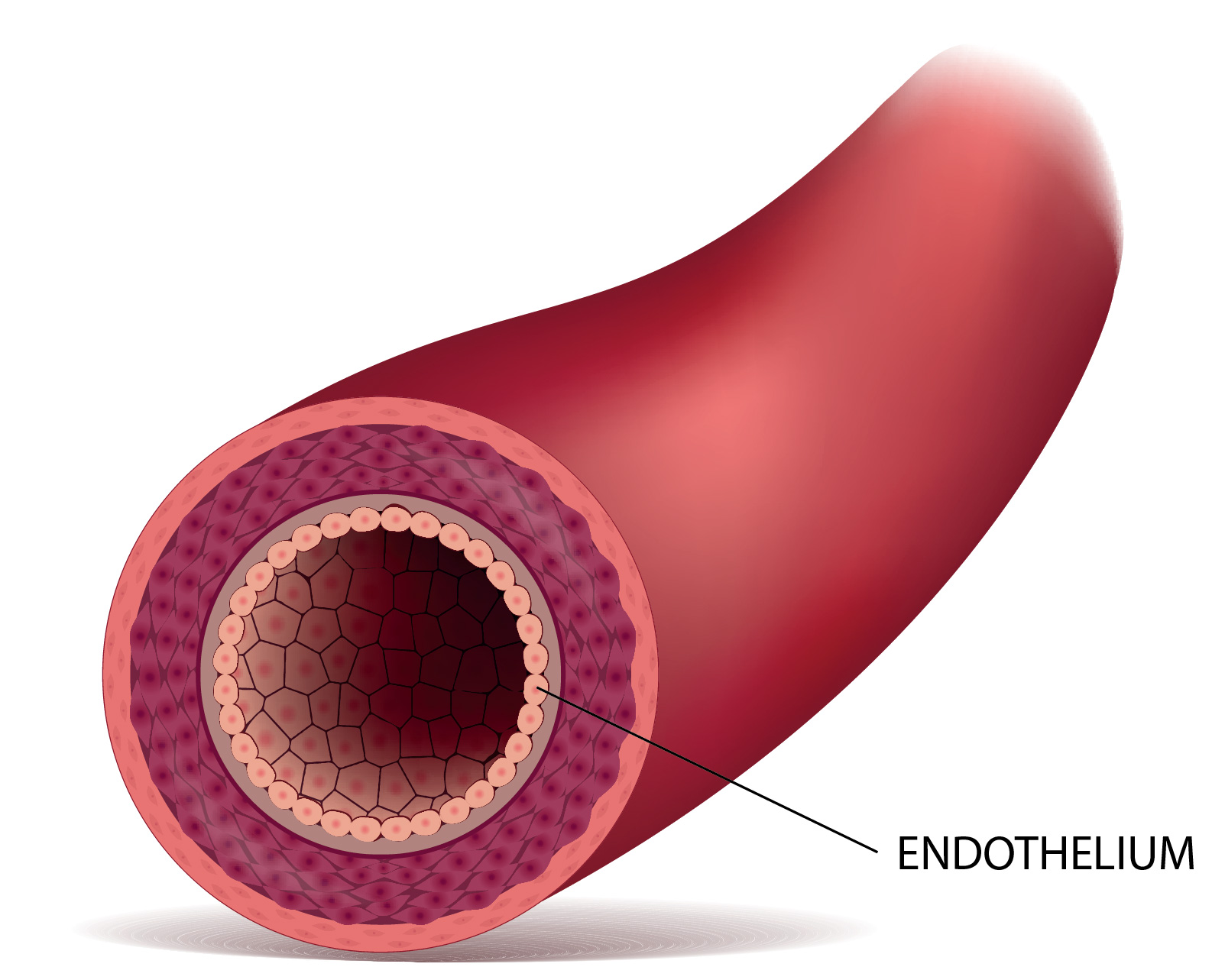
Anatomical illustration of a blood vessel cross-section with endothelial cells releasing nitric oxide into the bloodstream
Fig. 1 — Endothelial cells line every blood vessel and manufacture nitric oxide on demand.

The endothelium is a single layer of cells that lines the inside of every artery, vein and capillary in your body. Laid flat, it would cover the area of more than two tennis courts and weigh about as much as your liver. Yet it is just one cell thick — and it is the factory floor where nitric oxide is made.

When you start to exercise, blood shear stress increases against this lining. In a healthy endothelium, the enzyme endothelial nitric oxide synthase (eNOS) immediately converts the amino acid L-arginine into nitric oxide. The vessels relax outward, diameter increases, and within seconds flow rate to working muscle can rise five- to twenty-fold.

The Athletic Equation

L-arginine + oxygen → via eNOS → Nitric Oxide → Vasodilation → Performance

When the endothelium is healthy, this happens instantly and effortlessly. When it isn't, the entire chain stalls — and so does the athlete.

Chapter Two — The Molecule

Meet NO. Two atoms. One profound effect.

Nitric oxide is a remarkably simple molecule — a single nitrogen atom bound to a single oxygen atom — but its biological influence is immense. Inside your body it acts as a signalling gas that diffuses through cell membranes in milliseconds and tells the smooth muscle surrounding your arteries to relax.

For decades scientists assumed signalling molecules had to be large, stable and travel through the bloodstream like hormones. The 1998 Nobel Prize was awarded specifically because three American pharmacologists — Robert Furchgott, Louis Ignarro and Ferid Murad — proved a fleeting gas could carry a precise biological message. Their finding rewrote vascular medicine.

"Nitric oxide is so central to cardiovascular function that, were it a drug, it would be the most important pharmaceutical ever made."
— Dr. Louis J. Ignarro, Nobel Laureate (1998)
Chapter Three — Cellular Energy

Performance is built one mitochondrion at a time.

Inside every one of your muscle cells are thousands of tiny power plants called mitochondria. They consume the oxygen you breathe and the fuel from your food and convert them into ATP — the molecular currency of energy that powers every contraction, every step and every heartbeat.

Mitochondria are entirely dependent on oxygen. And oxygen is entirely dependent on blood flow. A trained endurance athlete can have two to three times the mitochondrial density of a sedentary person of the same age — but that density only translates to performance if blood and oxygen actually arrive. Nitric oxide is what opens the door.

Peer-reviewed studies in Cell Metabolism and the American Journal of Physiology have demonstrated that nitric oxide also stimulates the biogenesis of new mitochondria — increasing not just oxygen delivery, but the cellular capacity to use it. This is natural, sustainable energy: produced by your own cells, on your own terms, without stimulants and without caffeine.

≈ 5–20×
muscle blood flow during peak exercise
10–30%
improvement in exercise economy reported in NO studies
~2 sec
for NO to act on a vessel wall
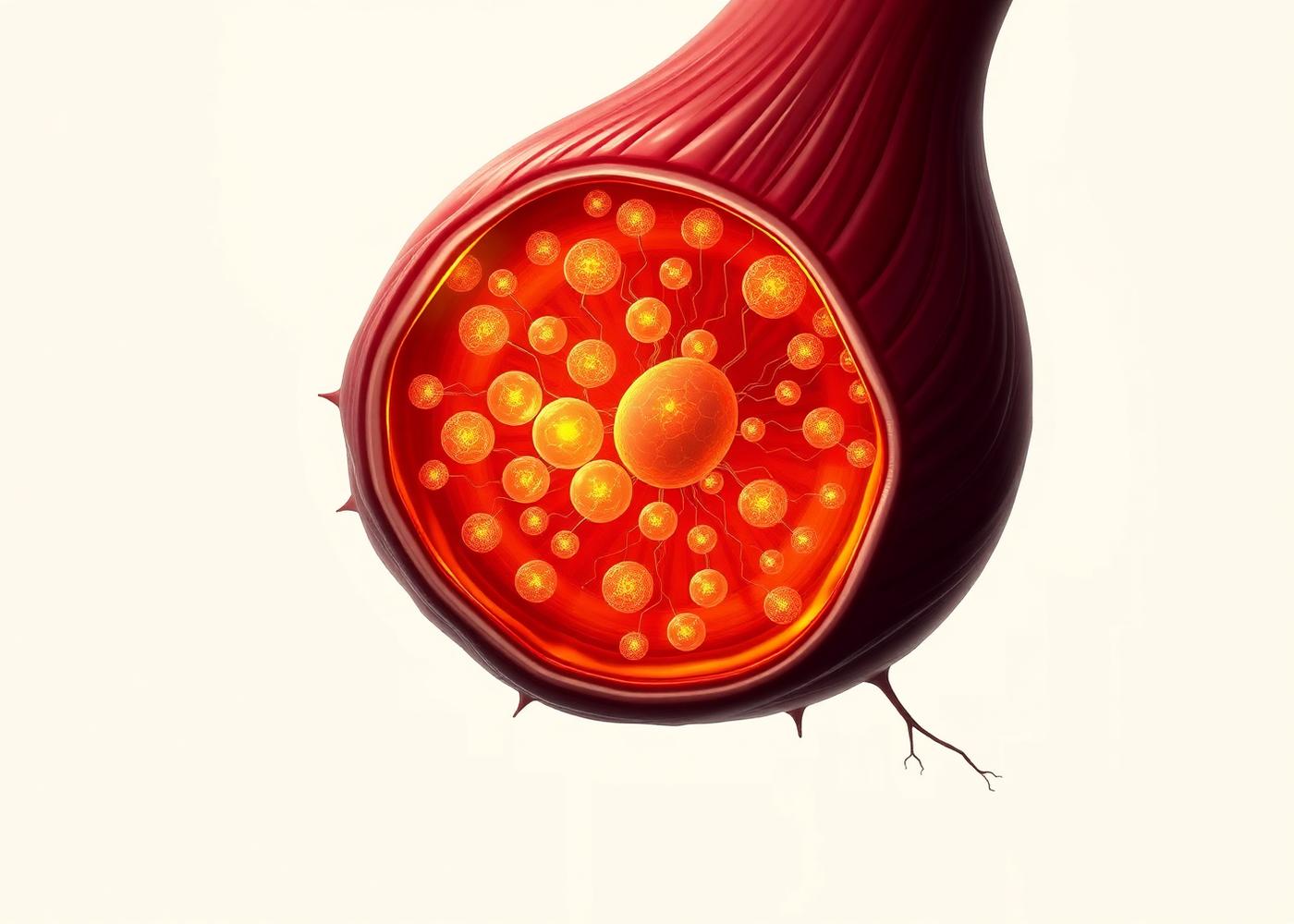
Illustration of muscle cell interior packed with glowing mitochondria producing ATP energy
Fig. 2 — Mitochondria use oxygen delivered via nitric-oxide-dilated vessels to manufacture ATP, the body's natural energy.
Chapter Four — The Quiet Decline

By age 40, your body produces roughly half the nitric oxide it once did.

This is one of the most consistent findings in vascular ageing research. Endothelial nitric oxide production begins to taper in the late twenties, drops by approximately 50% by age 40, and continues falling by another ~10% per decade after that. By 60, output may be a fifth of what it was in early adulthood.

For an athlete this is the missing explanation behind a familiar story: the same training that once produced clear gains begins to produce diminishing returns. Recovery takes a day longer. Heart rate at a given pace is higher. Hard sessions feel harder. The pump fades. The legs feel heavy. None of this is "just getting older." It is the slow loss of NO.

The encouraging news, repeatedly demonstrated in clinical studies, is that the eNOS pathway is remarkably responsive. Given the right inputs, the endothelium can restore much of its nitric-oxide-producing capacity at any age.

Chapter Five — Performance Across The Decades

How nitric oxide shapes athletic life from 30 to 60+.

Athletic woman in her early 30s running on a forest trail at sunrise
Athletes in their 30s

The decade most athletes ignore.

Your eNOS pathway is at its peak, but it has already begun its slow downward drift. Resting recovery is fast and forgiving — but the foundations of cardiovascular health that you build (or fail to build) in this decade will determine your athletic life from 40 onwards. The goal in the thirties is preservation: protect the endothelium with movement, sleep, and stable blood-sugar nutrition so peak NO production lasts as long as possible.

  • Maintain VO₂ max and capillary density
  • Faster between-session recovery
  • Sustained focus through hard training blocks

Lean athletic man in his mid 40s cycling on an open coastal road at golden hour
Athletes in their 40s

The decade NO loss becomes felt.

This is the decade most masters athletes describe as the first hint that the body is changing. Workouts that produced clear adaptation in the thirties begin to plateau. Heart rate at a given pace edges up. Recovery between sessions lengthens. The underlying driver is, in most cases, declining endothelial nitric oxide. Restoring NO availability has been shown to improve exercise economy, lower submaximal heart rate, and increase time-to-exhaustion in trained adults aged 40–55.

  • Improved exercise economy at submax pace
  • Faster lactate clearance
  • Lower perceived effort on long efforts
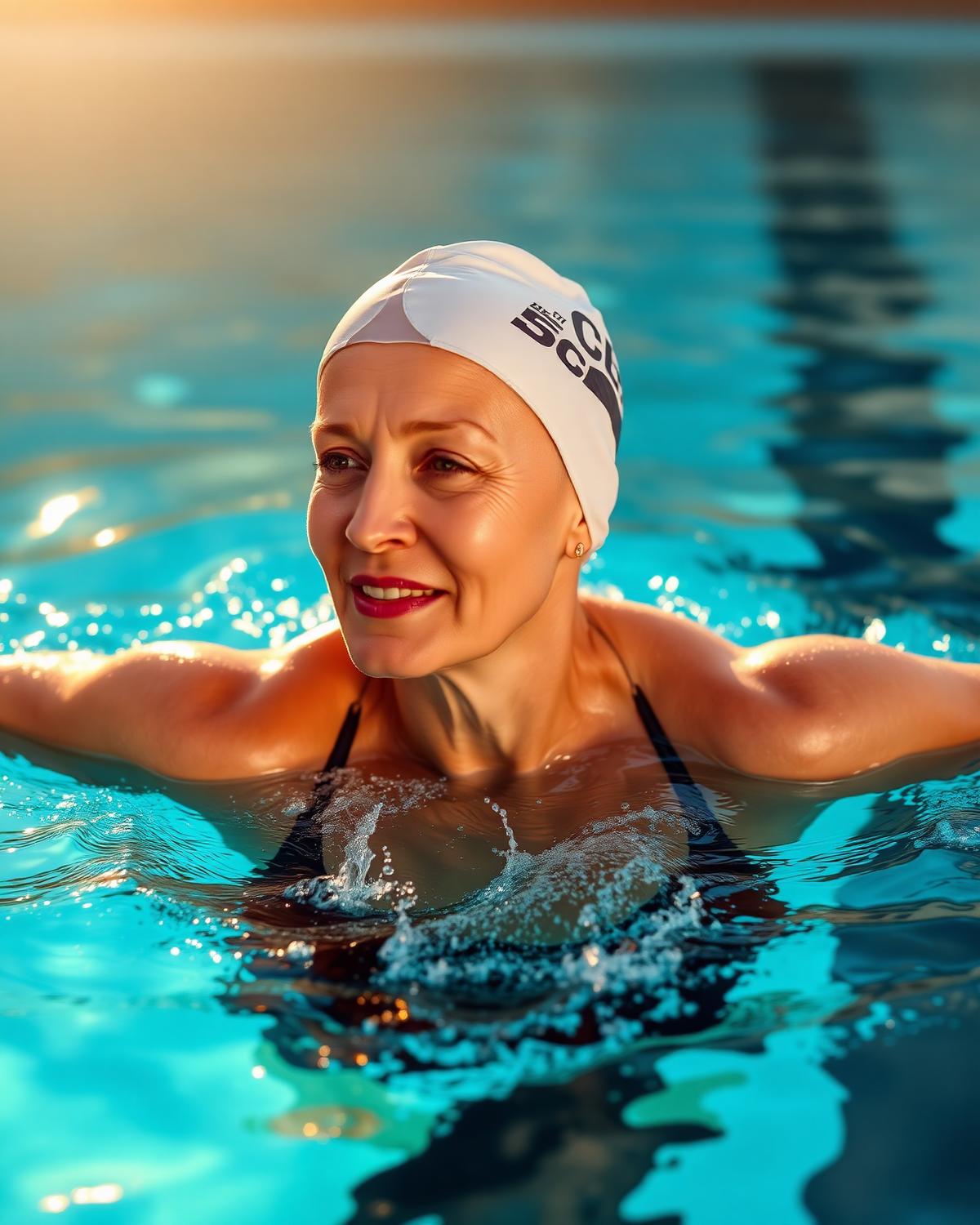
Vibrant fit woman in her early 50s swimming freestyle in a sunlit outdoor pool
Athletes in their 50s

The decade where circulation decides everything.

By the fifties, baseline NO production may have fallen to a third of its peak. Yet research from the European Journal of Applied Physiology shows that fifty-somethings with healthy endothelial function can train and compete with cardiovascular metrics comparable to athletes fifteen years younger. The differentiator is not training volume — it is circulation. The athletes who thrive in their fifties are the ones whose vessels still respond when called upon.

  • Maintained muscle perfusion at higher intensities
  • Healthier blood pressure during and after effort
  • Improved sleep depth — central to recovery at this age
Strong, vibrant man and woman in their early 60s hiking briskly up a mountain ridge with trekking poles
Athletes in their 60+

The decade where the right inputs change everything.

After 60, the gap between active and sedentary peers widens dramatically. Vascular ageing accelerates without intervention — but it is also the decade where targeted support produces the largest, most measurable gains. Multiple controlled trials have shown that improving endothelial NO availability in adults over 60 produces meaningful improvements in walking economy, grip strength, balance and recovery from exertion. Performance, at this age, is largely a circulation story.

  • Greater endurance during sustained daily activity
  • Sharper cognition during and after exercise
  • Faster recovery from strain, travel and stress
Chapter Six — Natural Energy, Not Artificial

Energy that lasts because your own cells made it.

Stimulant-based pre-workout formulas create the sensation of energy by triggering a stress response. Caffeine, synephrine and other stimulants raise heart rate, constrict vessels and release adrenaline. The athlete feels switched on — but the underlying biology is, paradoxically, the opposite of what is needed for endurance: vessels narrow rather than open, peripheral blood flow drops, and recovery is impaired.

Nitric oxide is the opposite kind of energy support. It does not stimulate. It does not constrict. It does not borrow from tomorrow to pay for today. It simply opens vessels and lets the energy your mitochondria already produce arrive where it is needed — earlier in a workout, in greater quantity, and for longer. The result is the kind of energy that elite endurance athletes describe as "effortless": a steady, aerobic, cellular energy that does not spike and does not crash.

This matters most as we age. After 40, the cardiovascular cost of stimulant use rises sharply, while the benefit shrinks. Supporting natural NO production becomes the better long-term strategy for almost every active adult.

The Evidence

What peer-reviewed research has shown.

01

Improved exercise tolerance & reduced oxygen cost of exercise.

Bailey et al., Journal of Applied Physiology (2009)
02

Increased time-to-exhaustion in trained cyclists.

Lansley et al., Medicine & Science in Sports & Exercise (2011)
03

Stimulation of mitochondrial biogenesis via NO signalling.

Nisoli et al., Cell Metabolism (2003)
04

Restored endothelial function in adults aged 40–65.

Schmitt et al., Circulation Research (2018)
05

Lower submaximal heart rate and blood pressure during exercise.

Vanhatalo et al., American Journal of Physiology (2010)
06

Improved walking economy in adults over 60.

Kelly et al., European Journal of Applied Physiology (2013)

These are representative studies drawn from a body of more than 150,000 peer-reviewed papers on nitric oxide and human physiology indexed in the U.S. National Library of Medicine (PubMed). The weight and consistency of the evidence is what places nitric oxide at the centre of modern cardiovascular and sports science.

An Effective Way To Support The eNOS Pathway

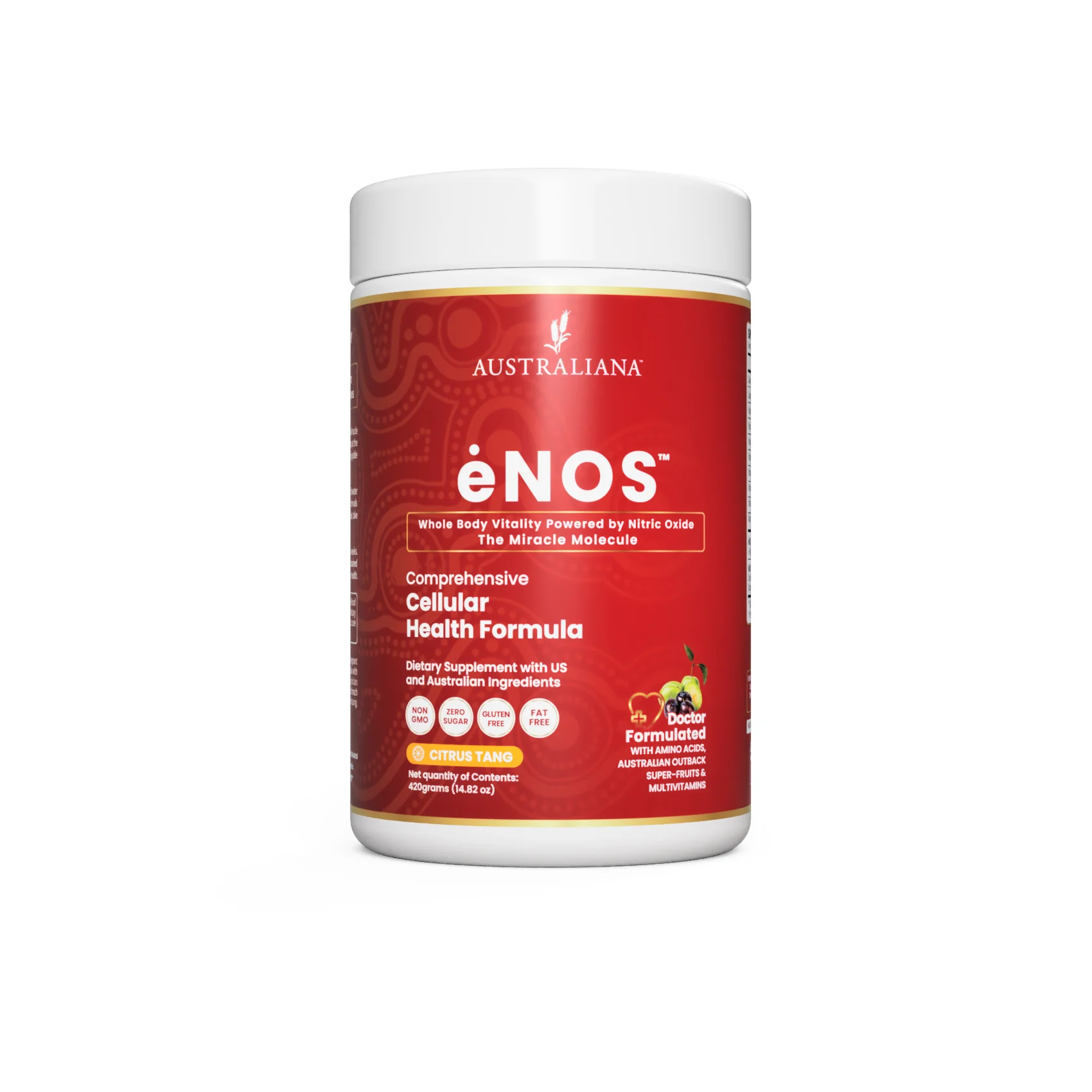
ėNOS — formulated specifically for the nitric oxide pathway.

ėNOS — a 30-day nitric oxide support supplement by Australiana Life
ėNOS is a once-daily, stimulant-free drink developed in Australia to support the body's natural nitric oxide pathway.

Restoring nitric oxide production requires giving the endothelium the raw materials it needs. The eNOS enzyme converts the amino acid L-arginine into nitric oxide; L-citrulline provides a sustained second wave; antioxidant polyphenols protect newly-made NO from being destroyed by oxidative stress; and specific vitamins and minerals act as required co-factors for the eNOS pathway.

ėNOS by Australiana Life is one of a small number of supplements formulated specifically around this complete pathway — combining pharmaceutical-grade L-arginine and L-citrulline with AstraGin® absorption enhancement, B-vitamin and mineral co-factors, and a polyphenol blend from Australian superfruits including Davidson's plum and Kakadu plum.

It is stimulant-free, caffeine-free, and taken as a great-tasting daily drink. It is what many athletes after 40 have been quietly using to keep training as if they were still in their thirties.

In Summary

Six things every athlete after 30 should know.

  1. 01Athletic performance is governed by oxygen delivery, and oxygen delivery is governed by nitric oxide.
  2. 02Nitric oxide is produced inside the endothelium — the single-cell lining of every blood vessel.
  3. 03Natural NO production drops roughly 50% by age 40 and continues to fall by ~10% per decade afterwards.
  4. 04Restoring NO availability has been shown to improve VO₂ economy, recovery and time-to-exhaustion across age groups.
  5. 05NO-supported energy comes from your own mitochondria — not from stimulants, not from caffeine.
  6. 06The eNOS pathway is remarkably responsive: given the right inputs, the endothelium will respond at any age.
Continuing The Conversation

You received this report from someone who thought it might matter to you.

For more information refer to the person who shared this link.

Thank you for reading. Nitric oxide is one of the most important discoveries in modern physiology, and its relevance to athletic performance is only growing as the research deepens.